

GRL Pep Talks: Real Conversations for Real Growth
Your go-to space for leadership, confidence, identity, team culture, and the everyday challenges young women and student-athletes navigate.
Not sure where to start? Here's how it works.
GRL Pep Talks are honest, research-backed pieces written by Dr. Lauren Young — educator, athletic leader, and founder of The GRL Initiative. Each one is designed to meet you where you are, whether that's figuring out who you are, leading under pressure, parenting a kid who's hard to figure out, or just trying to stop shrinking in rooms that weren't built for you.
Inside each Pep Talk you'll find personal essays, journal prompts and worksheets, deep dives into equity and belonging, and quizzes to help you reflect on who you're becoming.
Find your entry point: Browse the four collections below and pick the one that matches your season. Or scroll the full feed and let a title stop you — they're written to be honest about what's inside. Once you're in a post, click any category tag to find more pieces on that topic.
Choose Your Pep Talk Collection:
Find the words you need for the season you’re in.
Identity & Belonging
For the moments you’re figuring out who you are, where you fit, and how to grow into yourself — without shrinking to belong.
Mental Health & Burnout
For when life feels heavy, loud, overwhelming, or exhausting — and you need permission to be human, not perfect.
Girls in Sports & Equity
For athletes, advocates, and leaders working to build better systems, stronger pathways, and real access for girls.
Motherhood & Real-Life Leadership
For the women leading teams, families, careers, and chaos — learning that leadership is lived, not just performed.

Why Belonging Matters More Than Skill in Youth Sports
Belonging—not talent—is the real engine of youth sports. Research from Project Play, the Women’s Sports Foundation, and the CDC shows that girls stay in sports when they feel connected, supported, and socially safe. Skill matters, but belonging matters more. This GRL Initiative guide explains why, and how parents and coaches can build teams where girls thrive.

What Coaches Need to Know About Playing Kids Up
Playing kids up isn’t always the advantage it appears to be. Research from Project Play, the Developmental Model of Sport Participation, and the Women’s Sports Foundation shows that social belonging, emotional readiness, and age-appropriate challenge matter more than talent alone. This guide outlines what coaches need to know before moving an athlete to an older team—and how to create an environment that protects confidence, safety, and long-term development.

Why Kids Quit Sports: The Big 7 Reasons (and How to Prevent It)
Kids don’t quit sports because they’re soft — they quit because the environment stops serving them. Research from Project Play, JAMA Pediatrics, and the Women’s Sports Foundation shows the top reasons kids, especially girls, walk away from sports: loss of belonging, stress, harsh coaching, burnout, comparison, and decreased confidence. This guide breaks down the seven biggest reasons and offers solutions to help kids stay confident, connected, and excited to play.
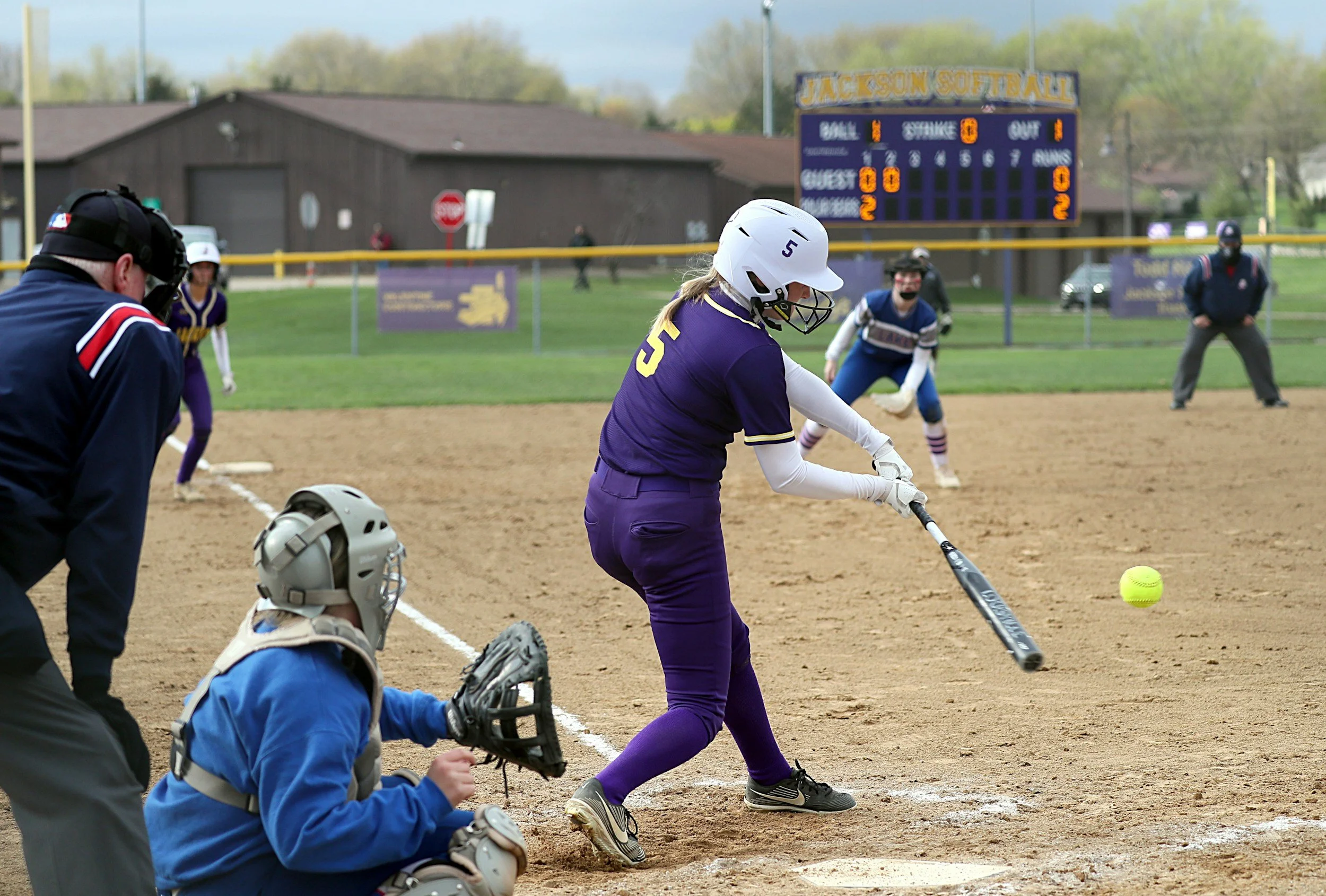
When Your Child Plays Up: How to Support Them Emotionally & Socially
If your child was moved up to an older team and is struggling with confidence, belonging, or playing time, you’re not alone. Many girls experience stress, identity shifts, and a loss of joy when playing up. This research-backed guide helps parents support their child emotionally, socially, and developmentally—while protecting long-term confidence and love for the game.

Is Your Child Ready to Play Up? A Research-Backed Checklist for Parents
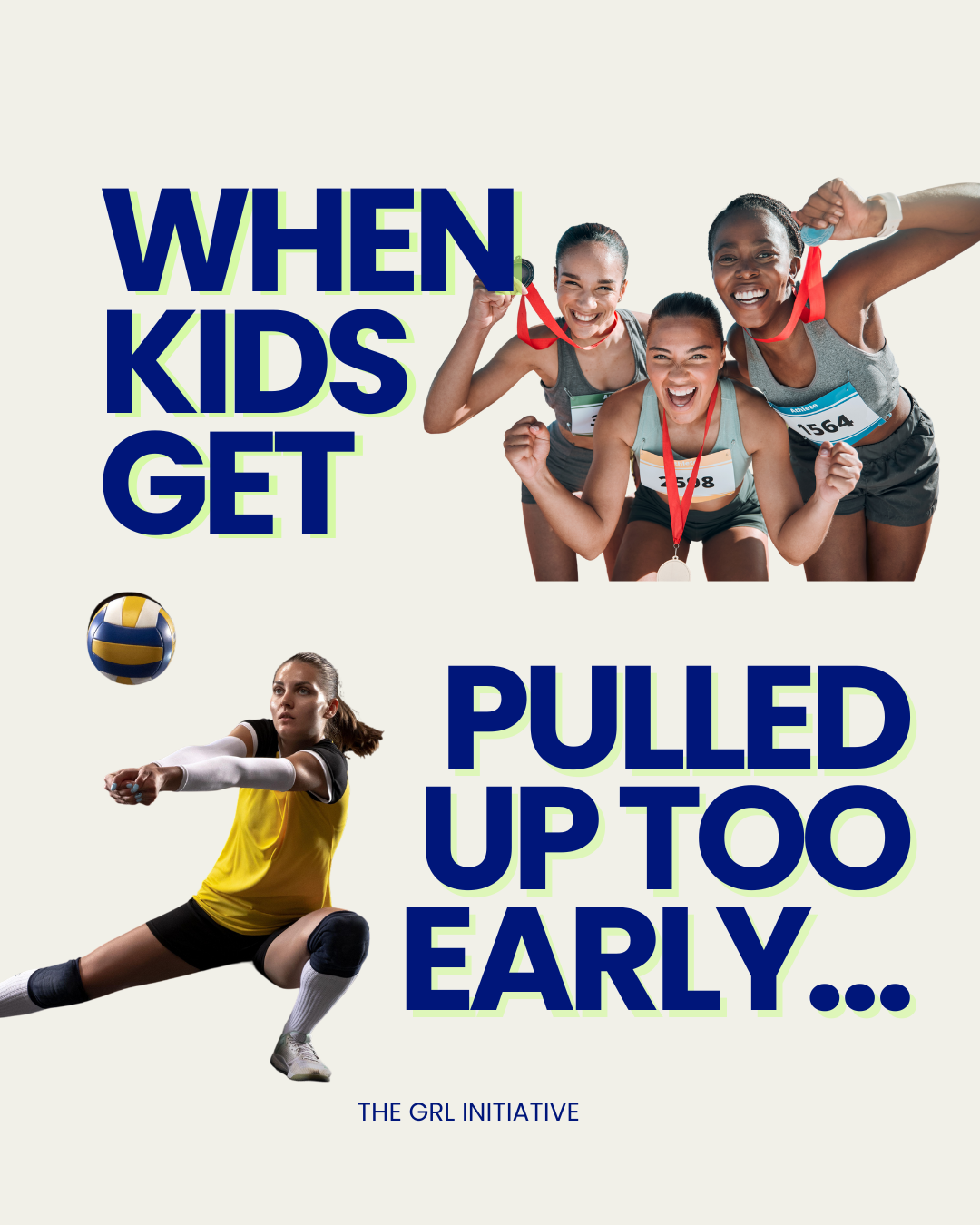
Should Kids Play Up? What Happens When Children Move to Older Teams
When kids are moved up to older teams too soon, their confidence, development, and sense of belonging can take a hit. Research shows this is one of the biggest reasons kids quit sports. Here’s what families need to know before saying yes to “playing up.”

It’s My Birthday — And Here’s the Truth About Why This One Feels Different
This birthday feels different. At 42, I’ve spent a year doing the hard internal work — exploring my identity, redefining connections, setting boundaries, and beginning the long journey toward true belonging. I’m not there yet, but I’m growing, stretching, and becoming in ways I’m finally proud of.

How to Pick a Sport With Your Daughter
Choosing a sport with your daughter shouldn’t be stressful. This GRL Initiative guide helps families explore interests, match personality types, and find activities that build confidence and joy.

The Hype Warm-Up: A 5-Minute Routine for Your Mind Before a Game
Nerves don’t mean you’re not ready. Learn the GRL 5-minute hype warm-up — a simple routine to steady your mind, harness adrenaline, and show up with confidence.

How to Help Choose a Youth Program Based on Your Daughter’s Personality Type
Your daughter doesn’t need to fit into a sport — the sport should fit her. Here’s how to choose a youth program based on personality, pressure, preferences, and joy.

When the Pep Talk Isn’t Enough
Sometimes the pep talk isn’t enough — not because you failed, but because you’re overloaded. Learn how to shrink your world, find the root cause, and take the next step forward.

The Psychology Behind Hype: Why We Freeze, Why We Fizzle, Why We Shine
We all have cycles of being dialed-in and cycles of total “blah.” Your hype isn’t broken — it’s psychology. Here’s why we freeze, why we fizzle, and how to shine on purpose.

Parent’s Guide: How to Know If a Youth Sports Program Is Right for Your Child
Parents have choices when it comes to youth sports, but how do you know if a program is truly right for your child? This guide offers a clear, research-informed checklist to assess belonging, coaching, playing time, communication, and overall culture—so you can choose a space where your child feels safe, supported, and excited to grow.

The GRL Initiative: Youth Sports Culture Audit: Is Your Program Built for Kids or Competition?
This checklist is designed to help coaches, parents, leagues, and youth programs evaluate whether their environment is truly built for kids — not just competition. Use it to reflect honestly on your team culture, coaching practices, parent behavior, and overall developmental approach. Check every item that applies to your program. The goal isn’t perfection — it’s awareness. Once you know where your strengths and gaps are, you can make thoughtful changes that help every child feel safe, included, and excited to keep showing up.
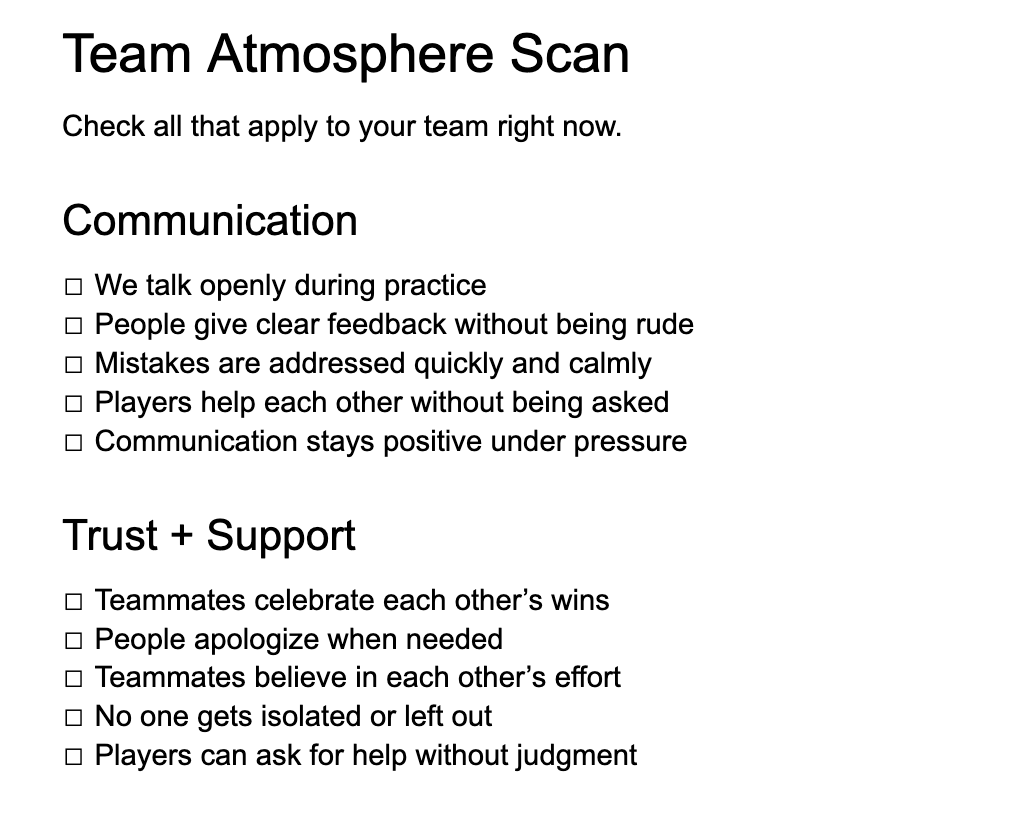
Worksheet: Understand what makes your team work well during calm seasons, to help protect with drama hits.
Strong teams aren’t built during conflict—they’re built during the calm moments. This post helps student-athletes understand what makes a high-functioning team work, what strengths to notice, and how to protect positive team culture before drama shows up.
When Things Are Good: How to Build the Kind of Team That Can Survive Drama Later
Strong teams aren’t built during conflict—they’re built during the calm moments. This post helps student-athletes understand what to notice, what to protect, and how to lead when their team is functioning well, so they’re better prepared for the hard moments later.

Let’s Talk About Team Drama (Because It’s Never Just Drama)
Team drama can make practices tense, games stressful, and the whole season feel heavier than it should. This post breaks down what drama does to a team, why it feels so overwhelming, and how you can navigate it with confidence, clarity, and leadership—without getting pulled into the chaos.

5 Boundaries You Can Copy + Paste — Even If Setting Boundaries Feels Uncomfortable
Setting boundaries doesn’t make you difficult — it makes you healthier. In this post, you’ll get five copy-and-paste boundary scripts backed by research, plus a conversation-style pep talk to help you protect your time, energy, and emotional wellbeing with confidence.

How to Find a Sport (or Hobby) You Actually Like — Even If You’re Starting From Zero
Trying something new doesn’t require confidence — just curiosity. Whether you’re exploring rec sports, creative hobbies, or brand-new activities, this guide helps you choose something you’ll actually enjoy. With research-backed tips and a down-to-earth pep talk, here’s how to find your thing at any age.

When Rest Feels Wrong (And Why That Doesn’t Mean Anything Is Wrong With You)
If rest feels uncomfortable or “wrong,” you’re not alone. High-achieving and caregiving brains often struggle to slow down — not because something’s wrong with you, but because your body isn’t used to safety in stillness. In this post, we explore the science behind rest guilt, small steps to make rest easier, and a pep talk for anyone learning to slow down.